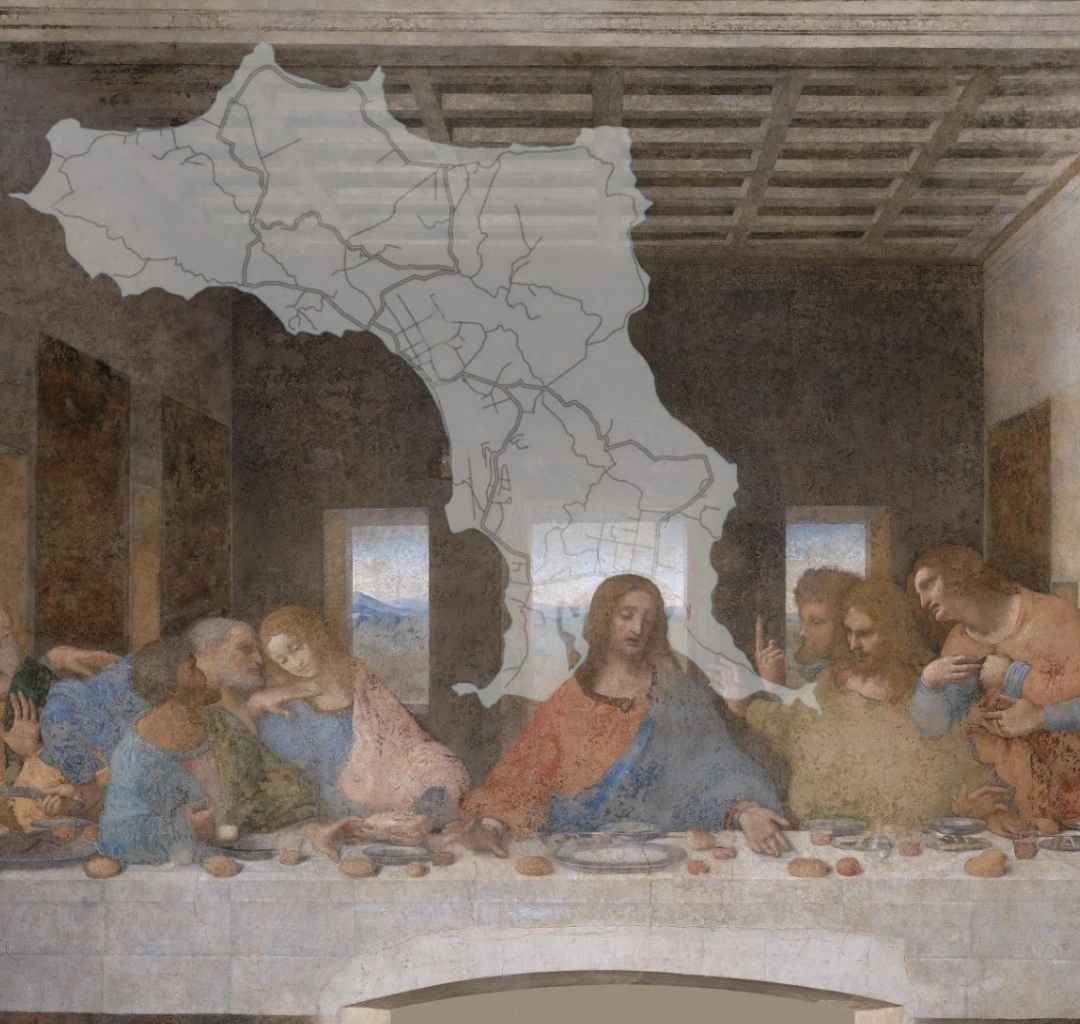
FRANCESCO MELZI — LEONARDO'S DEATH AND BURIAL


Painting by Francesco Melzi, Vertumnus and Pomona, 1520 — constellation code "Cerberus," with its rebus and anagram

The messages left by Francesco Melzi in two of his paintings and one drawing tell us about Leonardo's final year of life. The conclusion is that he died in Florence, and that Melzi buried him in Santa Croce; his floor tomb, with its Latin epigraph, is a rebus. This inscription, translated into Italian, unveils and declares his burial place, within which lies his first book of secrets — "occulte bugie soltanto" ("only hidden lies").

Melzi's paintings — Vertumnus and Pomona and Flora, both dated around 1520 — have proven to be codes, decipherable in the same way Leonardo himself worked in his paintings, using constellation codes. In Vertumnus and Pomona, the constellation of Cerberus — guardian of the dead — is the first of eight rebuses describing Leonardo's secret tomb in Santa Croce, Florence.

Here follows the image of the floor tombstone of the Cocchi tomb in Santa Croce, Florence — the tomb I arrived at after the eight constellation-code readings of Francesco Melzi's paintings.
The Cocchi floor tombstone in Santa Croce, Florence
A brief account of the number of letters used, transcribed from Latin into Italian
The Cocchi tombstone proved to be a rebus. By anagramming the Latin epigraph into Italian, I obtained the following result — a transcription with the anagram overlaid:

"LEONARDO DA VINCI VISSI RICCO, GRATO A MADRE CATERINA BUTES, CRESCO DI TUA PIA LUCE, MI AMASTI CON SQUISITO GIUOCO, CAVAR I TUOI PRIMI FIORI, EBBI VITO UBBIDIR" — 1/10/1451
(the date of his first birth)
Translated: "Leonardo da Vinci, I lived rich, grateful to mother Caterina Butes; I grow by your pious light; you loved me with an exquisite game; to gather your first flowers, I was made to obey."
(Note: the anagram works only in the Italian original; the translation above conveys its meaning.)