SAINT ANNE WITH THE VIRGIN, THE CHILD, AND THE LAMB
SAINT ANNE WITH THE VIRGIN, THE CHILD, AND THE LAMB
Saint Anne with the Virgin and Child is a painting dated 1510–1513, held at the Louvre Museum. Based on its composition, it can be considered a "rhetorical figure" that departs from the conventions of biblical narrative. Leonardo's priority was to create a compositional synthesis that communicates the mystery that pervaded his childhood. The painting represents the sublimation of his creative art and philosophical thought.
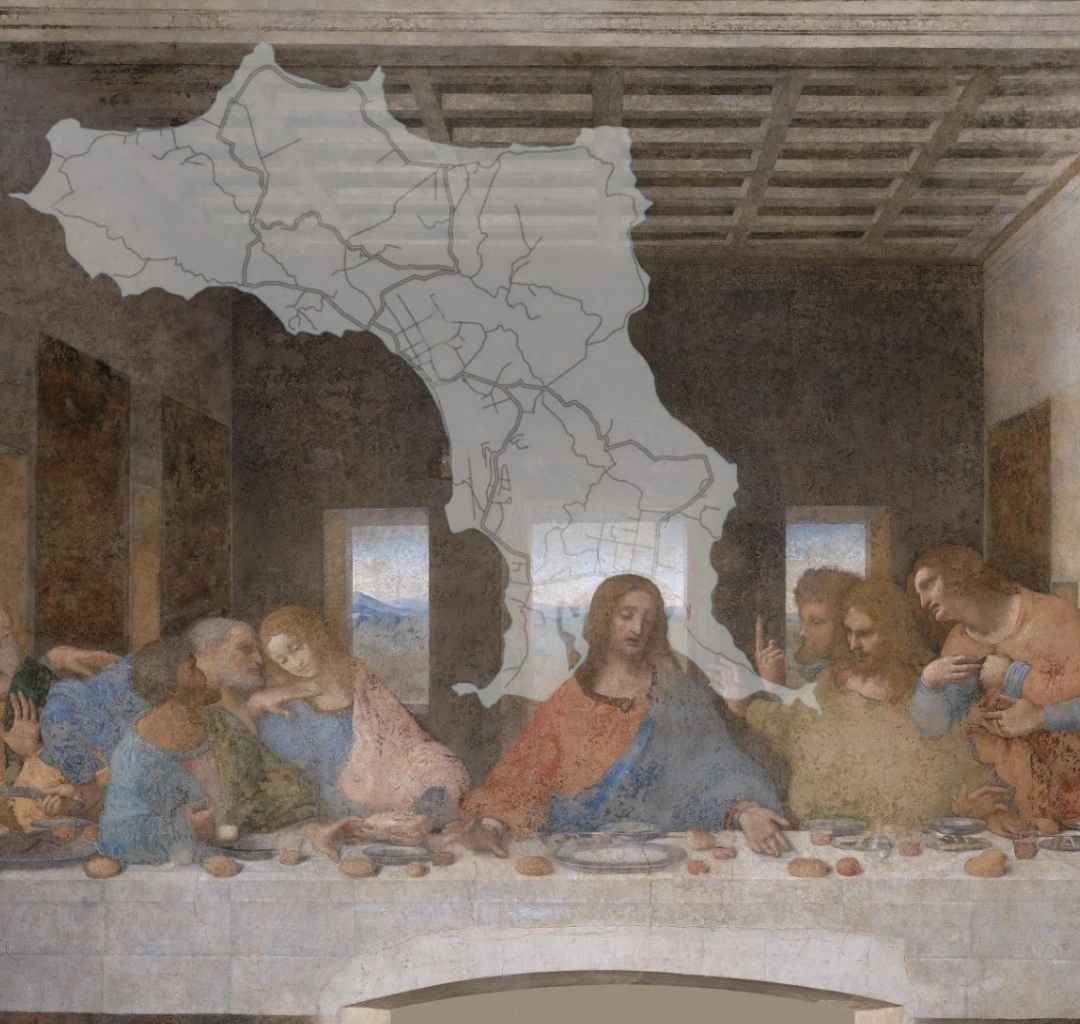
Here I present one of the most significant readings, concerning the "principle of form." Just as in the Virgin of the Rocks and the Last Supper, Leonardo repeats the secret code: the island is the key that opens the way to a full understanding of the iconographic composition and its meaning.
With extraordinary precision, Leonardo constructs the painting's structure with clear intent, following a principle of formal and divinatory identification. He interlocks the island of his mother Caterina's origins at the base of the three figures — Mary, Jesus, and the lamb.
In the overlay, we can see how the shape of the lamb's leg (the lower tip of the island) repeats identically, fitting and wrapping around the anatomy of the foot and the outline of the lamb's silhouette. The entire shape of the island fits precisely within the bounds of the painting.

Overlay of the island of Carriacou